15 Ukrainian Drone Experts Reportedly Train Tuareg Rebels in Mali
A CNN investigation claims Kyiv is aiding separatists against Russian-aligned forces in the Sahel, a move that has drawn sharp criticism from Bamako.
By Nathan Cooper ·
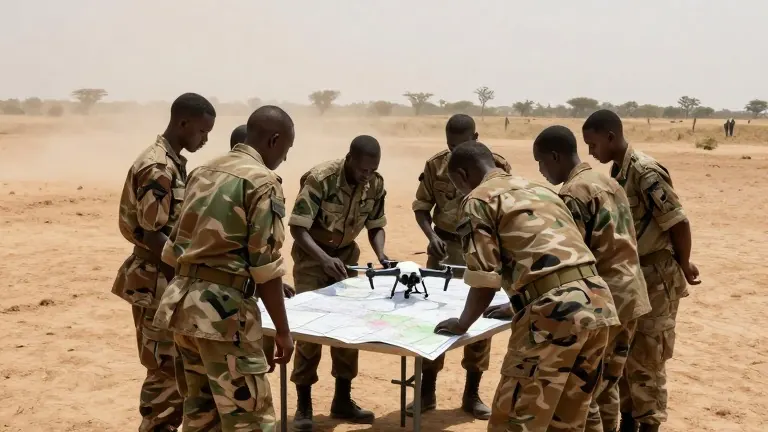
A conflict between Ukraine and Russia is spreading into the Sahel, according to a new report claiming that approximately 15 Ukrainian drone specialists are training Tuareg rebels in northern Mali. The investigation, published by CNN in September, identifies the Ukrainian team as supporting the Azawad Liberation Front (FLA) against the military government in Bamako and its Russian allies.
The presence of Ukrainian personnel in the region has fueled debate over the reach of the war in Europe. Kyrylo Budanov, former head of Ukraine’s military intelligence and now chief of staff to President Volodymyr Zelenskyy, posted on X on September 7 that his agency protects Ukraine’s interests worldwide. He wrote that this scope extends from Russia to Africa, mentioning operations in “burning desert sands.” Budanov did not name Mali explicitly, and CNN has not independently verified the specific details of the drone training and remote support.
The timing of the report follows a history of suspicions dating back to 2024. In July of that year, Ukrainian military intelligence was linked to an ambush near Tinzaouaten that inflicted heavy losses on Russian Wagner Group paramilitaries and Malian troops. At the time, HUR spokesperson Andriy Yusov stated that the rebels received necessary information for the attack, while Kyiv denied direct involvement. The current report suggests a deeper, ongoing logistical relationship.
Strategic experts see a clear motive in the potential alliance. Marta Oliynyk-D'omochko, a coordinator for the African Studies Program at the National University of Kyiv-Mohyla Academy, told Deutsche Welle that Ukraine aims to weaken Russian influence globally. She argued that rolling back Moscow’s military reach would also diminish its economic opportunities. Irina Filatova, a professor emeritus at the University of KwaZulu-Natal, agreed that the support is plausible but noted she lacks independent evidence to confirm it.
The partnership carries political risks because the FLA cooperates with Jama'at Nusrat al-Islam wal Muslimeen (JNIM), an al-Qaeda affiliate. While the two groups have different goals, their tactical cooperation could allow jihadists to benefit from Ukrainian equipment or knowledge. Oliynyk-D'omochko described the arrangement as a situational alliance against a common enemy rather than a comprehensive partnership, noting that the FLA seeks autonomy in the north rather than a total government replacement.
Mali, along with Niger and Burkina Faso, has already accused Ukraine of supporting armed groups that threaten their territorial integrity. In September, Malian Foreign Minister Abdoulaye Diop told the United Nations that Kyiv provides “clear and open support” to terrorist groups. The three Sahel nations, all under military rule, have severed diplomatic ties with Ukraine and deepened their cooperation with Moscow.
Ukraine’s military intelligence service, the HUR, has not provided a specific response to recent inquiries. A spokesperson said the agency might provide information at a later date, leaving the extent of the involvement unclear. The next step in the diplomatic standoff will likely come as the three Sahel states continue to press their case against Kyiv on the international stage.
Source: Deutsche Welle