Tokyo Film Festival Jury Weighs New Official A-List Status
Festival leadership and jurors discuss the practical implications of FIAPF’s recent reclassification of the 39th Tokyo International Film Festival.
By Mei Chen ·
The 39th Tokyo International Film Festival continues its run through November 4, operating under a new official designation from the industry’s governing body. The International Federation of Film Producers’ Associations, known as FIAPF, recently restructured its accreditation system. This change replaced a previous four-category ranking with a single list of 17 A-list festivals. Tokyo is now officially included in this group alongside Cannes, Berlin, Venice, Toronto, Busan, Shanghai, and Cairo.
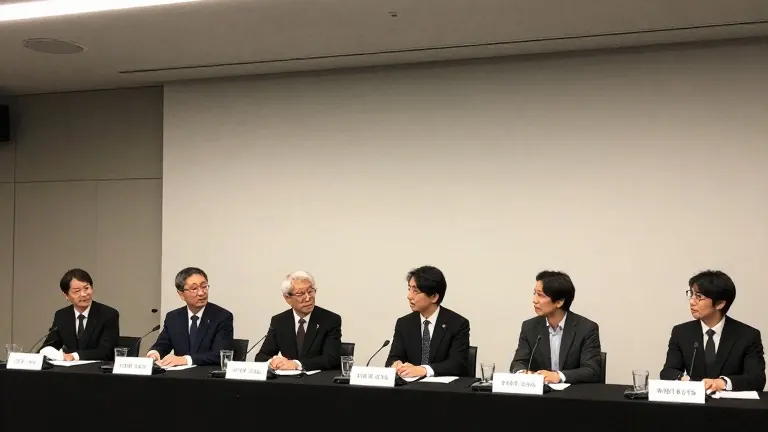
Rolf de Heer, the Australian filmmaker presiding over the festival’s competition jury, addressed the change during a press conference on Tuesday. De Heer, known for directing “Bad Boy Bubby” and “Ten Canoes,” stated that Tokyo was effectively treated as an A-list event by most attendees prior to the official designation. He noted that the formal recognition does not fundamentally alter the festival’s character. “I think Tokyo has always been considered one of those festivals by most people who attend festivals,” de Heer said. “Tokyo was effectively an A festival. And so in that sense, I don’t think it makes a lot of difference.”
Despite this perspective, de Heer acknowledged that the label may influence the quality of films secured for future editions. He suggested the official status could help the festival attract higher-profile entries. “And so in that sense, it may help that it is officially now again A, but I don’t think it changes the festival so much,” he added. The five-member jury, which includes de Heer, will select the Tokyo Grand Prix from 15 competition titles.
Korean producer Oh Jungwan, founder of Bom Film Productions, offered a contrasting viewpoint during the same conference. She described herself as “not a film festival person” and suggested that the classification holds little weight for general audiences. “So I don’t know what is A-list or not,” Oh said. “So maybe probably A-list means good, so but as an audience, we’re not going to the festival because of their A-list or not. We just go to watch film and enjoy the feeling, the festival feeling.”
When asked to weigh in on the ranking system, de Heer offered a concise assessment of its impact on different stakeholders. “It matters a great deal to some people, and not at all to others. And that is as it should be,” he said. Other jury members, including Japanese actor Watanabe Makiko, producer Alex Lo, and colorist Yov Moor, did not provide detailed comments on the accreditation change during the session.
The conversation also touched on international co-productions between Japan and Australia. De Heer argued that financial-based co-productions, common in Europe, are less effective for Japanese and Australian films. He emphasized the need for natural storylines that require filming in both countries. “It makes no sense for a Japanese film to shoot in Australia, it makes no sense for an Australian film to shoot in Japan,” he stated. “Australia is not so good at that.”
Producer Alex Lo, whose film “Heads or Tails?” won the best director award at the previous Tokyo festival, noted a growing trend among producers in Europe and the United States. She observed that these producers are increasingly seeking co-production opportunities, largely due to a lack of local government support in their home markets.
De Heer explained how the jury intends to handle potential disagreements among its members. He expressed confidence that the panel could reach a consensus without settling on a compromised selection. “I’m with four other very reasonable people, and I’m sure we can find a way through that we don’t end up with some sort of lesser compromised film, but a really interesting film that maybe some of us don’t like,” he said. Oh, serving on a Tokyo jury for the second time, recalled a previous instance where she argued for a film for seven hours. “Every other jury [member] hated me,” she said, adding that she hoped to avoid a similar confrontation this year.
Source: Variety · original report published
More Culture · Sarasota news · Report a business · Got a Story?