Iraqi Environmentalist Returns to Marshes After Torture and Kidnapping
Jassim al-Asadi, founder of Nature Iraq, resumed monitoring the central marshes three years after being held by an Iran-backed militia that accused him of being a spy.
By Nathan Cooper ·
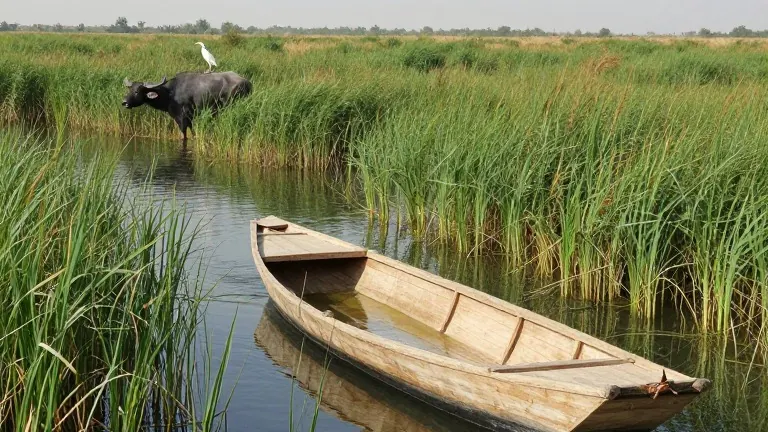
Jassim al-Asadi has returned to the central marshes of southern Iraq to monitor water levels and interview local herders. The 69-year-old environmentalist is leading a group of fishermen and buffalo breeders who are moving their herds back onto the water after five years of severe drought. This return marks a shift in the region's ecology as water levels rise and vegetation recovers.
The marshes suffered greatly between 2020 and 2025. Drought conditions dried out large sections of the wetlands, leaving behind brackish water that stunted reed growth. Many water buffalo died from lack of food and contaminated water, forcing residents to seek fresh sources or move to the outskirts of southern cities. Now, as the rains return, these families are repopulating the small floating islands where they have lived for thousands of years.
Al-Asadi's presence in the marshes is not new. He helped restore the area after the 2003 U.S.-led invasion toppled Saddam Hussein. In the 1990s, Hussein had drained the marshes and set parts on fire to punish a Shiite uprising. Al-Asadi and co-founder Azzam Alwash led efforts to tear down earth embankments, allowing the Tigris and Euphrates rivers to flood the land again. They founded Nature Iraq in 2004 and successfully lobbied for the site to become a UNESCO World Heritage Site in 2016.
Al-Asadi's work brought him international attention, but it also made him a target. In February 2023, gunmen from an Iran-backed militia kidnapped him on the road south from Baghdad. They accused him and the journalists he frequently hosted of being Israeli agents who helped orchestrate anti-government protests in Iran. The group claimed he ran a spy network connecting world capitals to Tel Aviv.
For two weeks, his captors tortured him in a cell. They blindfolded him, beat him, and plunged his head underwater repeatedly. They also used electric shocks and suspended him from the ceiling by his arms, beating his wrists with metal chains. Al-Asadi says he recited poetry by Iraqi poet Saadi Youssef to keep his mind off the pain. He refused to sign a confession that he was a spy, even when his captors gave him an hour to write a will or confess.
Al-Asadi wrote a will stating his love for Iraq and his desire for the country to be independent and strong. He asked his family not to be too upset and wished his children would follow his path. Instead of killing him, the militia dropped him off on a road in Baghdad near his family. His cousin, who was driving at the time of the kidnapping, had memorized the license plate of one of the vehicles, which helped identify the group within two hours.
The Iraqi government pledged to secure his release, but Al-Asadi's Bani Asad tribe took the lead. They mobilized 400 armed tribal fighters and surrounded the home of a militia leader to demand his freedom. Alwash says the tribe's show of force made clear that if Al-Asadi died, the leader would too. As part of the deal, Al-Asadi agreed not to pursue the case in court. He refused an offer of European asylum, stating that leaving would be exactly what his captors wanted.
He asked for asylum for two of his children, who now live in Sweden, while a third resides in the United States. Al-Asadi said this arrangement allowed him to work for the marshes without putting his family in danger. Alwash, who has not returned to Iraq since the kidnapping, says intelligence services warned him he was also at risk. He notes that Iran suspects Nature Iraq is a Mossad operation because it works on conservation projects in both countries.
Al-Asadi continues his work from his office in Chibayish, on the edge of the central marshes. He says he approaches each sighting of wildlife with the same excitement he felt as a child rowing his own boat to school. He now spends his days in a long, narrow boat, watching kingfishers and water buffalo, ensuring the wetlands that sustained one of the world's oldest civilizations remain intact.