El Niño rains will not fix California's long-term water crisis
Experts say one wet winter offers only temporary relief, as aging infrastructure and low reservoir levels limit long-term storage gains.
By Mei Chen ·
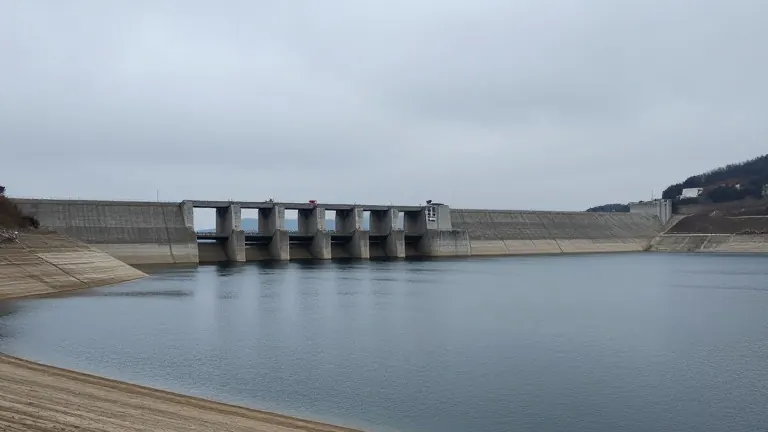
A strong El Niño winter will not solve California's water shortages, according to four UC Riverside scholars who analyzed the state's storage limits and climate trends.
Kurt Schwabe, a professor of environmental economics and policy, explained that a single wet year provides relief for only about two years. He noted that Southern California relies heavily on Lake Mead and Lake Powell, which require three to five consecutive years of above-normal precipitation to recover significantly. The region has faced a 25-year drought in the Colorado River system, a duration that one winter cannot offset.
Hoori Ajami, a professor of groundwater hydrology, added that groundwater recovery takes an average of three years after a drought. She warned that many overdrawn aquifers may never fully return to previous levels. Ariel Dinar, a distinguished professor emeritus of environmental economics and policy, agreed that a single year of heavy rain cannot reverse years of deficit.
The source of California's water is also shifting. Francesca Hopkins, an associate professor of climate change and sustainability, pointed out that the Sierra snowpack is melting earlier due to rising temperatures. In March 2026, a heat wave reduced the snowpack to 18% of normal levels by April 1. This early melt shifts water availability closer to the rainy season, reducing the natural storage function of the mountains during the dry summer months.
Current infrastructure was designed for a different climate and is now undersized for the volume of water arriving in intense storms. Schwabe stated that reservoirs must keep empty space for flood control, which limits how much stormwater can be stored. Because most of the Colorado River's water comes from upstream states like Colorado and Utah, heavy rain in Southern California does not automatically increase the river's total supply.
Managers face a difficult trade-off between storing water for the dry months of June through August and leaving room to prevent flooding. Without accurate, real-time forecasts, operators often keep reservoir levels low to prioritize flood safety over water storage. Dinar argued that the state needs integrated institutions and policies to handle these extreme variations more flexibly.
Agriculture remains a key part of the solution, though farmers hold priority water rights. Hopkins observed that water supplies have already shifted from Imperial Valley farms to urban areas like San Diego, making the agricultural sector more economically vulnerable as shortages persist.