Expert warns Chinese-built Waymo vans could spy on riders
Missy Cummings argues that the new Zeekr-made vehicles pose a national security threat, even if Waymo installs its own self-driving systems.
By Nathan Cooper ·
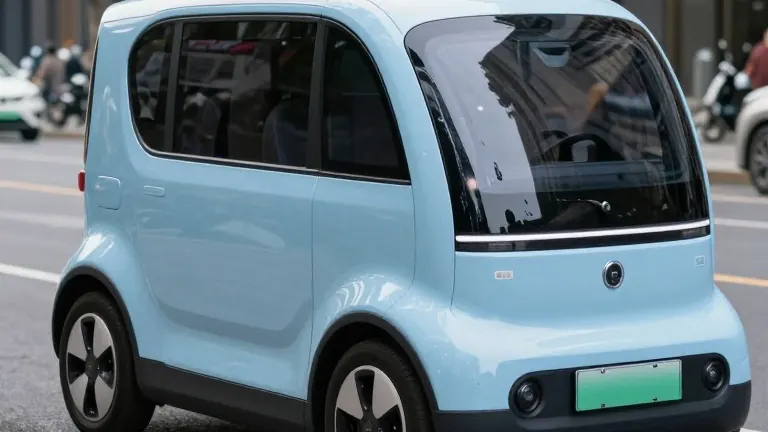
Missy Cummings believes the new blue Waymo Ojai vans rolling onto Arizona streets act as inherent spying devices. The autonomous vehicle researcher at George Mason University and former National Highway Traffic Safety Administration safety adviser made the claim on the latest episode of Generation AI, which airs at 7 p.m. Wednesdays on AZ Family+. She called for an independent investigation to check for hidden surveillance tech.
Cummings argues that current safety measures are not enough to protect against foreign adversaries. She wants a government agency or independent third party to inspect the vehicles. Her concern is that the cars, built in China by Zeekr, could contain vulnerabilities that allow remote control or data collection.
Waymo’s standard fleet uses Jaguar SUVs made in Austria. The new Ojai models are different because they are manufactured in China. Waymo states that the vans arrive in the U.S. without connected-car technology. The company then installs its own cameras, sensors, and self-driving systems at a facility in Mesa.
The company says it runs rigorous security tests to protect trade secrets. It also claims it does not share rider identities, vehicle telemetry, or driving data with the manufacturer. Cummings disagrees, noting that different technologies can be layered onto a Chinese shell. She pointed to 2024 investigations of Chinese cranes at U.S. ports where hidden cellular modems were found.
MoffettNathanson estimates Waymo will import about 5,000 Ojai vehicles this year. That number exceeds the size of its existing fleet. The cost difference is substantial. Analysts estimate a completed Ojai costs Waymo roughly $100,000. A comparable Jaguar vehicle costs about $200,000.
In Congress, Sens. Bernie Moreno of Ohio and Elissa Slotkin of Michigan introduced the Connected Vehicle Security Act of 2026. The bipartisan bill would ban vehicles built in China, even if the self-driving systems are American. The Senate Commerce Committee cleared the measure unanimously in July.
Cummings is not a fan of outright bans, saying they can throw the baby out with the bathwater. She believes some support for the ban comes from a lobby trying to protect the American automotive sector. Instead, she favors stronger technical oversight from federally funded research centers like MIT Lincoln Laboratory.
She argues that U.S. regulators lack the technical capacity to inspect advanced AI systems and that federal agencies are understaffed. For passengers, she advises that they should never talk about anything they would not be willing to see on the Internet, regardless of who is recording the data.