Baltic film studios expand amid rising foreign production demand
Estonia, Latvia, and Lithuania report record foreign spending as new studios open and cash rebates attract international crews.
By Nathan Cooper ·
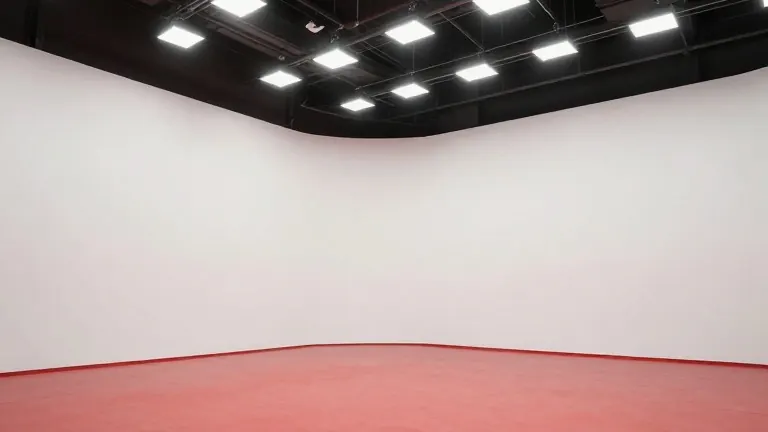
TALLINN, Estonia. The Ida Hub film complex opened in mid-October in Ida-Viru County, marking a major expansion for the region's audiovisual industry. The facility in Estonia's northeastern region includes two large sound stages, one measuring 1,200 square meters and the other 2,000 square meters. Industry guests attending the Black Nights Film Festival can tour the site on Nov. 21 and 22.
The $18.2 million project received partial funding from the European Union. It combines state-of-the-art filming facilities with a training program for new professionals and a technology startup incubator. Teet Kuusmik of the Ida-Viru Investment Agency says the goal is to establish the county as a trusted production hub. He notes that one TV production is in negotiation for a December start, with three larger film projects currently in discussion.
Estonia raised its cash rebate rate from 30 percent to 40 percent in April. Within two hours of the change, Film Estonia received 12 applications worth €5.8 million in rebates. Between April and October, 16 more submissions arrived, representing an additional €6.4 million. Edith Sepp, head of the Estonian Film Institute, says these figures demonstrate immediate demand. She is pushing for the annual budget to rise to €10 million for 2027, noting that current funds are insufficient for the growing volume of work.
Latvia also saw a surge in international activity. In late September, a delegation of Latvian film professionals traveled to Los Angeles to meet with representatives from Netflix, Disney, Lionsgate, and Paramount. The group included Nafta Films, Baltic Pine Films, Cinevilla Films, and Angels Films Studio. Liene Gulbe of the Latvian Investment and Development Agency led the trip. The country's rebate can be combined with the Riga Film Fund incentive, supporting up to 50 percent of eligible local costs.
Nafta Films co-produced the Golden Lion winner “Woman Unknown” with Nordisk Film. Esko Rips, CEO of Nafta Films, chose to shoot in Latvia rather than Estonia due to studio availability, Riga's historic architecture, and the stronger financial package. The production raised approximately €2.2 million from Latvia, nearly half the film's total budget. Mikael Rieks, a Danish producer, credited the skilled Latvian crew for maintaining the film's high production value.
LIAA paid out more than €3.1 million to international projects in 2025. That figure is set to climb to €6.9 million next year. Thirteen international projects received support in 2025, compared to 16 so far this year. Other recent features shot in Latvia include “Wild, Wild East” and “Minotaur,” a Cannes Grand Prix winner. Dita Rietuma, head of the National Film Centre of Latvia, describes the 2027 budget of €6.6 million as very limited, though an additional €1 million proposed by the government is a first step toward addressing structural underfunding.
Lithuania registered a record 19 international projects in 2025, up from 11 in 2024. These productions used a 30 percent local tax incentive scheme. Total investment reached €25 million, with a total spend of €85.7 million. Deimantas Saladžius of the Lithuanian Film Centre says foreign productions spent nearly €56 million in the country. The largest grant went to Sony Pictures Television’s “Star City,” an Apple TV+ series, which received €6.9 million. Lithuania is also planning a new large-scale film studio in Vilnius to strengthen its international competitiveness.
More Business · Sarasota news · Consumer Watch · Report a business · Got a Story?