33 Cities Move to Regulate Data Centers as Arkansas Vote Signals Shift
Jesse Johnson, who opposes the AVAIO Digital project, won 54% of the vote in District 14, joining a national trend of local restrictions on AI infrastructure.
By Mei Chen ·
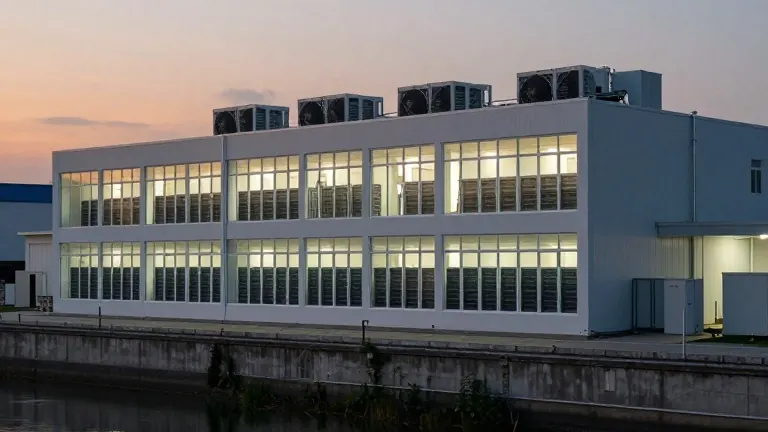
At least 33 cities across the United States have passed ballot measures to regulate, restrict, or ban data centers, according to a tally by USA Today. This surge in local action coincides with the 2026 midterm elections, where infrastructure projects fueled by artificial intelligence have become a central point of contention for voters.
The national trend is visible in Arkansas, where a new composition of the Pulaski County Quorum Court reflects voter dissatisfaction with the pace of data center development. Jesse Johnson, a 37-year-old Democrat and collision-repair shop owner from Maumelle, won the District 14 seat on Tuesday. He defeated incumbent Republican Paul Elliott with 54% of the vote in a district that includes Maumelle and western North Little Rock.
Johnson campaigned on stricter accountability for incoming facilities, specifically targeting the AVAIO Digital project. The company announced plans in January for a $6 billion data center outside of Wrightsville. The proposal triggered four months of debate in the Quorum Court before a new ordinance took effect on Oct. 27. The measure survived a veto by County Judge Barry Hyde after voters successfully overruled that decision.
Elliott was one of four justices of the peace who voted against the ordinance. He also supported Hyde’s initial veto. Johnson attributed Elliott’s loss to those consistent votes against regulation. "The data center is one of the largest things that brought me into this race," Johnson said. He added that he believes Elliott’s opposition to the rules cost him the seat.
Johnson distinguishes between standard data centers and those built specifically for artificial intelligence. He stated that he is personally against AI data centers due to their high energy and water consumption. He said other facilities are acceptable as long as they do not strain local utilities. "As far as my position on the data centers, I wish we could kick them out of Pulaski County," he said.
The incoming judge expressed concern about the location of the AVAIO project. "In Pulaski County, I don’t think it makes sense. We’re putting it dead on the Arkansas River," he said. AVAIO has an agreement with Central Arkansas Water to consume up to 1 million gallons per day. The company later indicated it might use a closed-loop cooling system to conserve water.
Resident concerns extended beyond resource usage. Johnson cited a local beekeeper who raised issues during Quorum Court public comment sessions. The beekeeper warned that constant noise from the facilities could disrupt her business. Johnson said he wants data centers built in locations that do not burden existing communities.
The shift in the Quorum Court is not uniform. In District 3, Democrat Kathy Lewison won 64% of the vote against Republican Reed Martin. Lewison supported the new ordinance, citing concerns about utility costs. In contrast, Republican Aaron K. Robinson retained his seat in District 11 despite voting against the ordinance. He defeated Democratic challenger Richelle Brittain in a district covering parts of Jacksonville.
Not all opponents of the rules lost their positions. Justice of the Peace Luke McCoy, who voted for the ordinance, lost his seat in District 12 to Democratic challenger Amber Nicole Govan. The results show that while the data center issue influenced many races, it did not guarantee victory or defeat for every candidate. Voters in several districts warned incumbents during public meetings that their votes on the ordinance would be remembered in November.
The election results in Pulaski County align with a wider pattern in national politics. Exit polls indicated that data centers factored into the votes for Congress for 56% of voters. In Ohio, Democratic candidate Sherrod Brown won the U.S. Senate seat on Tuesday. His campaign centered on opposition to data centers and big tech, mirroring the local arguments made in Arkansas.