17 ships hit as Black Sea becomes most dangerous waterway of the year
Ukrainian strikes on the Crimea bridge have cut land links while naval warfare in the region has killed over 40 sailors since July.
By Mei Chen ·
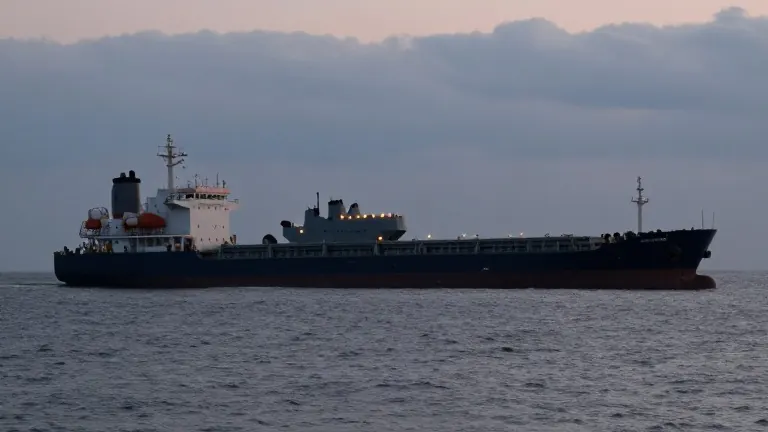
The Black Sea has become the most hazardous shipping route in the world this year. More than 570 vessels have been attacked in the region, resulting in the deaths of more than 40 sailors. For cargo operators, the waterway now requires military escorts that rival the complexity of a battlefield operation.
Ukrainian forces executed a third aerial attack in four days on the bridge connecting mainland Russia to the occupied Crimean peninsula this week. Drones and missiles struck a section of the 3 billion euro structure, causing one of its metal arches to fall into the sea. The damage severed a key road link and closed the shipping channel between the Black Sea and occupied ports on the Sea of Azov. Rail traffic was halted on Thursday.
The strike occurred just before Russian President Vladimir Putin met with US President Donald Trump in China. It highlighted the continued capability of Ukraine to project power despite US-imposed restrictions on Starlink communication systems. Serhiy Beskrestnov, a defence adviser to President Volodymyr Zelensky, noted that Russian technical experts are questioning how Kyiv maintained a stable connection during the operation. He called the solution a small secret.
The conflict in the Black Sea has shifted since Russia declared full-scale war in 2022. The Kremlin initially expected its Black Sea Fleet to dominate the region. However, Ukrainian Neptune missiles sank the Moskva, the 10,000-tonne flagship of the fleet, in April of that year. The loss forced Russia to move its naval assets eastward, away from the peninsula.
Russia has responded with air power to restrict Ukrainian movement. Dmytro Pletenchuk, a Ukrainian navy spokesman in Odesa, stated that Russia decided to impose a maritime blockade on Ukraine at the start of this year. He noted that Russia could not impose a traditional full blockade because Ukraine is not Venezuela and Russia is not the United States. Instead, Russian forces intensified air strikes on Odesa port and infrastructure.
Shipping continues via a coastal route hugging the shores of NATO members Romania, Bulgaria, and Turkey. Russian forces increased their use of jet-powered drones this summer, which are faster and harder to intercept than propeller-driven models. These drones have begun directly attacking civilian vessels.
At least 17 ships have been hit by drones off the coasts of Romania and Bulgaria since July. Some strikes occurred in the exclusive economic zones or territorial waters of these NATO states. Pletenchuk described these attacks as a challenge to NATO itself, as Russia attempts to stop Ukrainian exports.
Ukrainian naval officer Artem, who spoke on condition of anonymity, described the current situation as a positional war on the sea. He said the departure of every cargo ship is now a real military operation. Small ships defend larger cargo vessels from air and sea drones in a hazardous process that resembles a convoy operation.
The European Commission pledged 50 million euros to a Black Sea security centre for Romania and Bulgaria this month. However, both countries appear unable or unwilling to destroy Russian drones threatening ships in their waters. Artem believes Ukraine holds a slim technical edge in the region. He and Pletenchuk expect Ukraine’s defence industry to soon find a way to neutralize Russian jet drones.