Writers explain how they adapt famous stories for new limited series
Creators of 'Cape Fear,' 'Blade Runner 2099,' and 'American Hostage' detail their methods for balancing source material with fresh storytelling during a recent industry panel.
By Mei Chen ·
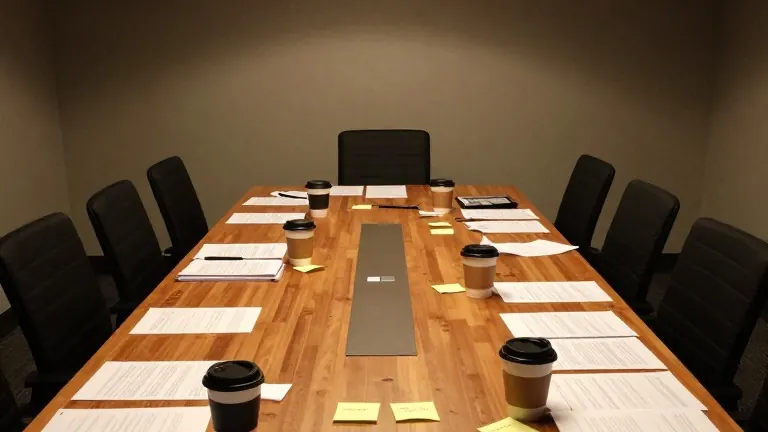
Creators of three recent limited series discussed their adaptation strategies during a panel moderated by Jazz Tangcay, senior artisans editor at Variety. The session, titled A Night in the Writers Room, featured Nick Antosca, Silka Luisa, Shawn Ryan, and Eileen Myers. The writers shared how they approach retelling stories that audiences already know.
Antosca, who wrote for the new 'Cape Fear' series, faced the challenge of updating a story with two prior film adaptations. He aimed to preserve the visceral elements of the original while introducing new psychological layers. He described his goal as creating a nightmare that feels both familiar and strange to viewers who have seen the source material.
Luisa, the writer for 'Blade Runner 2099,' worked within an established science fiction universe set 50 years in the future. Her team had to build on existing world-building while crafting a narrative that felt distinct. She emphasized the importance of visual storytelling and the specific look of the world around the characters.
Ryan and Myers discussed the creation of 'American Hostage,' which is based on a true 1977 event. The team relied on 911 calls, newspaper archives, and court documents for research. Ryan noted that while the team stroved for historical honesty, they used creative judgment to fill in gaps where specific details remained unknown.
The panelists stressed that assembling the right writers room is critical to success. Ryan said he looks for people who complement his own weaknesses and bring different life experiences. Myers compared the group dynamic to a boat ride, noting that the team rises and falls together and that the best idea should win.
Antosca likened the process to forming a band, where each writer brings a specific skill, such as humor or technical expertise. He said the chemistry among collaborators determines whether the project works, regardless of individual talent.
The writers also detailed how they collaborate with department heads to translate scripts into visual reality. Antosca called these collaborators his closest partners. Luisa highlighted the value of human craftsmanship, noting that seeing different artisans interpret her writing in a single room felt like a gift.
More Culture · Sarasota news · Report a business · Got a Story?