Stalled Bills Leave Florida College Students Relying on Campus Pantries
With state legislation to address student hunger failing twice, undergraduates in Florida turn to food banks and peer support to meet basic needs.
By Mei Chen ·
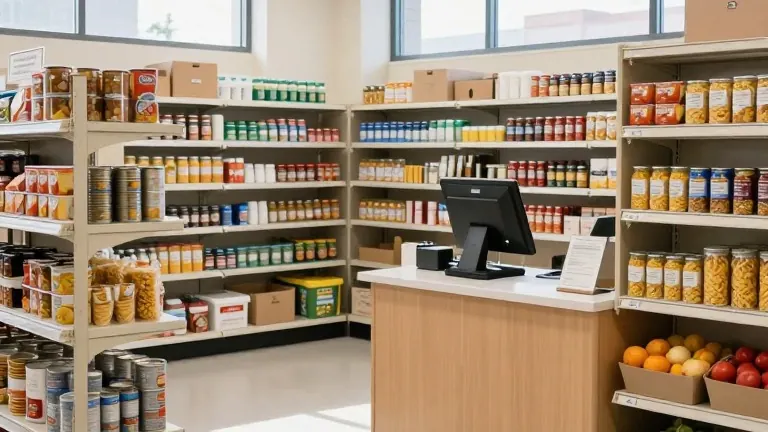
Florida students are increasingly dependent on campus food pantries as state efforts to address student hunger have stalled in the legislature. The lack of state support has forced many undergraduates to rely on informal networks and on-campus resources to secure their meals. This gap in support is becoming a defining feature of student life across the state.
State lawmakers have attempted twice to create a pilot program known as the Hunger-Free Campus. Both attempts failed to pass. In 2025, a House bill and a Senate companion died in their respective budget committees. A 2026 Senate version also stalled in March. That specific measure would have required the Florida Department of Agriculture and Consumer Services to form hunger task forces at three institutions. It would have also helped students enroll in the Supplemental Nutrition Assistance Program and stocked campus pantries.
The legislative failure leaves a large number of students without federal aid. Most students enrolled at least half-time cannot receive SNAP benefits unless they meet specific exemptions. These include working 20 hours a week or holding a work-study job. A 2024 report from the Government Accountability Office found that about two-thirds of potentially eligible students were not receiving benefits.
Patrick Healy, a meteorology junior at Florida State University, describes his financial situation as a middle-income gap. His parents earn too much for federal grants but not enough to cover his degree costs. Healy works at Walmart and receives small federal aid. He manages his food budget by eating snacks at home and paying a $12 entry fee to a dining hall two to four times a week. He often eats to the point of discomfort to maximize the value of the meal. He has not applied for SNAP because the application process is lengthy and the income verification requirements are inconvenient.
Eleanor Ferrier, a music education senior at Florida A&M University, visits the school's pantry twice a month. She commutes to campus by electric bike. In early August, heavy rain in Tallahassee prevented her from making the trip. She created an Amazon wish list on a Reddit assistance subreddit where strangers fulfilled her order. Ferrier said there have been multiple times she could only afford one meal a day.
Natalie Gonzalez, a master's student at Florida State University, led a student group urging the legislature to pass the Hunger-Free Campus bill. Food insecurity scored high in a school-wide student survey. The advocacy effort increased campus awareness and support for the FSU Food for Thought Pantry. Gonzalez said the topic remains relevant in current student surveys.
Representative Susan Valdés of Tampa sponsored early versions of the legislation. She filed a grant bill in 2022 and a pilot program version in 2023. The 2023 bill cleared a House subcommittee but died in an appropriations subcommittee. The state university system's Board of Governors argued the legislation was redundant because most campuses already run food pantries. Valdés said she was initially unaware of the prevalence of the issue and that it broke her heart to hear about it.
Campus organizations are adapting their strategies to reduce stigma. At the University of Central Florida, the Knights Helping Knights Pantry changed its name and messaging after a communication class study found students were unlikely to use it due to branding. The pantry dropped the word emergency from its name and calls students shoppers instead of customers. Nancy Rubio, the pantry manager, said the change aimed to create a less transactional relationship.
At Valencia College, a market called VCentials at the Osceola campus in Kissimmee distributes free food kits. Tahir Hamid, a student leader there, said the market is named to avoid negative social stigma. The market is positioned as an everyday convenience stop. At Santa Fe College in Gainesville, the Saints Food Share uses an online system where students schedule pickups and choose items using points. The pantry grew after receiving a U.S. Department of Education grant.
International students face additional barriers. William Bizotto dos Santos, a graduate student at the University of Florida, does not qualify for SNAP. He arrives at the Hitchcock Field and Fork Food Pantry 45 minutes before doors open every Monday. He budgets between $20 and $25 a week for food that the pantry does not provide. Autumn Haggard, a wildlife ecology freshman at UF, said the pantry helps her maintain her vegetarian diet and manage her grocery budget while working minimum wage at a pet supermarket.
More News · Bradenton news · Report a business · Got a Story?