Salmon bycatch divides Alaska Senate race
Industrial trawlers caught 40,000 salmon this year, fueling a political battle between Dan Sullivan and Mary Peltola.
By Mei Chen ·
A dispute over industrial fishing practices has become the central conflict in Alaska’s U.S. Senate race. The issue pits the state’s $1 billion pollock industry against Indigenous communities in western Alaska who rely on subsistence fishing for survival. As salmon returns to rivers like the Kuskokwim decline, the economic and cultural stakes are forcing voters to choose between political alliances and local tradition.
Republican incumbent Dan Sullivan has positioned himself as a defender of the fishing sector. He recently introduced legislation he describes as the most comprehensive bycatch bill ever, aimed at reducing accidental fish catches and protecting seafloor habitat. Sullivan has long served as an ally to the pollock industry, a sector based largely in Seattle. His campaign emphasizes his efforts to balance commercial interests with environmental concerns.
Democratic challenger Mary Peltola, an Indigenous representative from the Kuskokwim region, argues that Sullivan’s bill is a last-minute maneuver to secure votes. Peltola has stated she would ban factory trawlers, the largest vessels in the pollock fleet. She accused Sullivan of accepting over $300,000 from trawler companies before proposing what she called a half-hearted solution to a decades-long problem.
The scientific debate centers on the impact of bycatch, the unintended capture of non-target species. Pollock trawlers use nets that are a quarter mile long with openings as wide as a football field. These nets catch prized king salmon along with the target pollock. Heather Mann, who leads a trawlers association, contends that eliminating the pollock fishery would have minimal impact on salmon population recovery. She argues that blaming the industry distracts from other factors affecting fish runs.
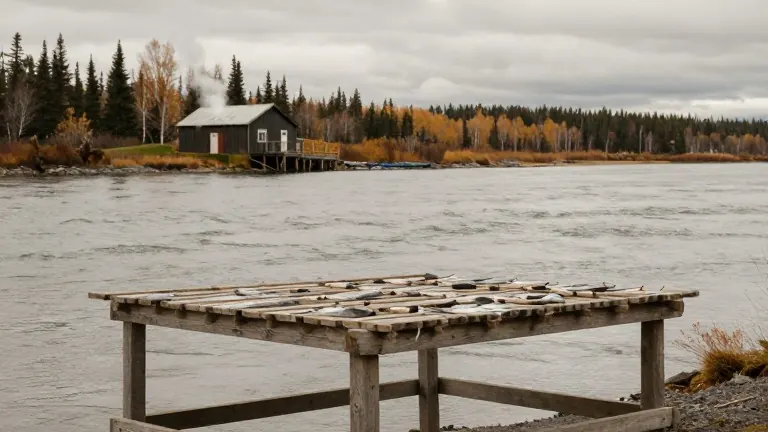
This year, pollock trawlers report catching 40,000 Alaska salmon. While this figure represents a small percentage of the total pollock harvest, the loss is devastating in remote villages. In Kwethluk, a village on the Kuskokwim River, subsistence fishing remains the primary occupation and a core part of cultural identity. Tribal president Mary Nikolai noted that many smokehouses in the village sat unused during the summer due to the lack of fish.
Local residents like Evon Waska, who lives near the Kuskokwim, blame offshore trawlers for closing rivers to family fishers while allowing industrial fleets to continue operations. Waska’s drying racks, usually filled with salmon, have remained empty for several years. Government agencies often close rivers to conserve fish, a decision that disproportionately affects those who fish to feed their families rather than for profit.
The race has drawn national attention, with political ads in Alaska heavily featuring the fishing dispute. Candidates are using the issue to frame the broader battle for control of the U.S. Senate. The outcome could influence the balance of power in Washington, making the fate of Alaskan salmon a focal point in a national political contest.