Navy Budget: Acting Secretary Faces Senate Scrutiny Over Iran War Costs
Hung Cao testified that maritime forces are strained by extended deployments and depleted stockpiles while seeking a waiver to become the permanent civilian head of the Navy.
By Mei Chen ·
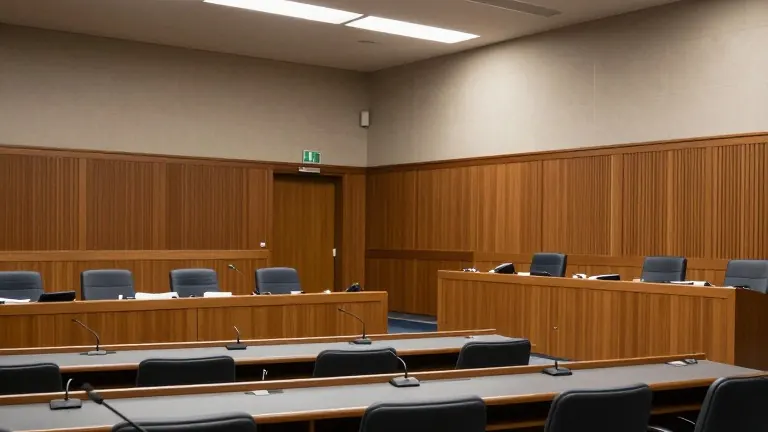
Acting Navy Secretary Hung Cao told the Senate on Tuesday that the war with Iran is straining maritime capabilities. He acknowledged that extended ship deployments and lower weapons stockpiles are affecting operational readiness. These comments came during his confirmation hearing for the permanent position of the service's top civilian leader.
Cao has served as acting secretary since April 2026 following his time as under-secretary. President Donald Trump supports the nominee, who requires Senate approval to finalize his appointment. The hearing occurred as the conflict entered its ninth month, following a failed House effort to impeach Defense Secretary Pete Hegseth over his management of the war.
Sen. Jack Reed of Rhode Island questioned Cao on the dismissal of naval officers by the defense secretary over the past year. Reed asked if Cao would shield military leaders from partisan influence. Democrats also criticized the Navy for removing the leadership team of the USS South Dakota after an underwater collision in October without standard congressional notification.
Cao defended the submarine incident, stating the squadron commodore relieved the commanding officer, executive officer, and command master chief because they did not meet the service's ethos. He argued that the Navy must protect the livelihoods of removed officers. Reed countered that privacy should not limit congressional oversight.
The nominee faced questions regarding the USS Abraham Lincoln, which returned to San Diego in early October after a 265-day deployment. The carrier's return allowed the USS George Washington to assume its duties, contributing to a temporary massing of three carrier strike groups to enforce the naval blockade against Iran. Sen. Richard Blumenthal of Connecticut argued that Cao's demeanor suggested a lack of care for sailors and their families.
Cao stated that he does not control deployment lengths, which have increased from the previous standard of six to eight months. He emphasized that sustained investment in personnel would improve readiness, retention, and recruitment. When asked about suicide attempts on ships, he described eight incidents as successful mitigations.
Federal law requires a seven-year separation from active duty to ensure civilian control of the military. Cao left active service in October 2021, meaning he needs a rare congressional waiver to serve permanently. Securing this exemption requires a 60-vote threshold in the Senate. The Democratic-controlled 120th Congress is scheduled to be sworn in on January 3, 2027, creating timeline pressure for his confirmation.
More Business · World news · Consumer Watch · Report a business · Got a Story?