IMF Director Credits AI for APEC Growth Edge
Pacific Rim economies are expanding at a faster rate than the rest of the world, a trend Kristalina Georgieva attributes to an ongoing investment boom in artificial intelligence.
By Nathan Cooper ·

The 21 economies of the Asia-Pacific Economic Cooperation forum are growing at an annual pace of 3.4 percent. That figure exceeds the 3.1 percent growth rate of the global economy. Kristalina Georgieva, managing director of the International Monetary Fund, presented these numbers to leaders in Shenzhen on Thursday. She identified artificial intelligence as the primary driver behind this performance gap.
Georgieva stated that AI is providing a material boost to global growth. This technology is helping to offset the economic drag caused by energy shocks from the war in the Middle East. She described AI as the most significant factor for medium-term competitiveness and productivity. According to her assessment, this sector represents the fastest transformation in human history.
Global trade expanded at a rate of 4.6 percent during the period. Georgieva noted that a large portion of this increase resulted from the current AI investment boom. She urged leaders to view the technology as a permanent fixture of the economic landscape rather than a temporary trend. Her warning to policymakers was direct: if they do not adapt, they will fall behind.
Chinese President Xi Jinping opened the closed-door leaders' meeting by calling for unity among APEC members. He compared the participating nations to passengers on the same boat. Xi argued that they must strengthen bonds to weather the winds and waves of the Pacific region. He emphasized the need to keep trade and technology development open to all members.
U.S. President Donald Trump offered a brief statement that focused on domestic economic gains. He claimed his administration has brought in trillions of dollars in new investment and created trillions in new wealth. Trump expressed confidence that he would sign additional trade agreements in the near future. He also vowed to oppose what he called globalist efforts to regulate artificial intelligence.
Russian President Vladimir Putin attended the summit for the first time in nine years. He supported Xi's call for unity and stated that APEC must set a constructive agenda for cooperation. The three leaders prepared to meet later in the day in a trilateral summit. That meeting was expected to address nuclear arms and the conflicts in Ukraine and the Middle East.
Tensions remain over the flow of advanced computer chips from the United States to China. Washington tightened restrictions on remote access to this technology earlier in the week. The new rules closed a loophole that allowed access to billions of dollars worth of Nvidia chips. This move followed a recent scandal involving Jensen Huang, the founder and former CEO of Nvidia, and a Chinese technology executive.
Asian leaders have pushed for a fairer distribution of AI technology. They argue that proper regulation is necessary to ensure financial stability and cybersecurity. The APEC group is slowly moving toward a free trade zone around the Pacific Rim. This long-term goal persists despite ongoing wars, trade disputes, and economic crises among the member nations.
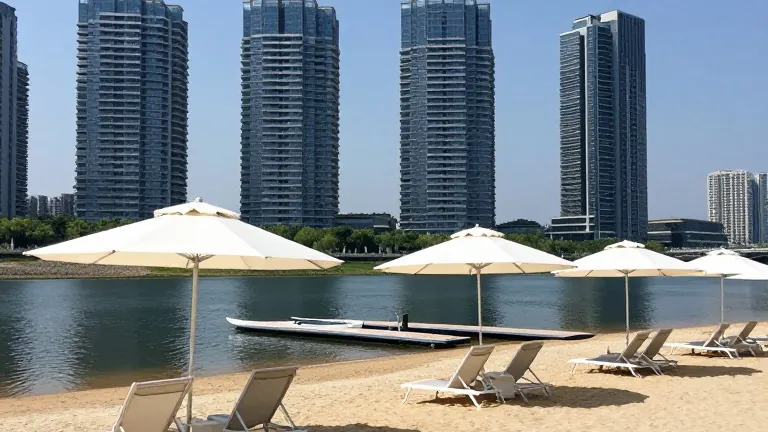
The summit took place in Shenzhen, a major hub for technology innovation. The venue featured light shows and robots to showcase China's leadership in the field. Formal traditions included gala dinners and bilateral meetings. A group photo captured the leaders wearing business attire and wide red or blue scarves.
More Business · Consumer Watch · Report a business · Got a Story?