BMW urban driving arrives in 2027
The German automaker plans to expand its driver assist system to city streets, starting with Germany, while maintaining Level 2 safety requirements.
By Nathan Cooper ·
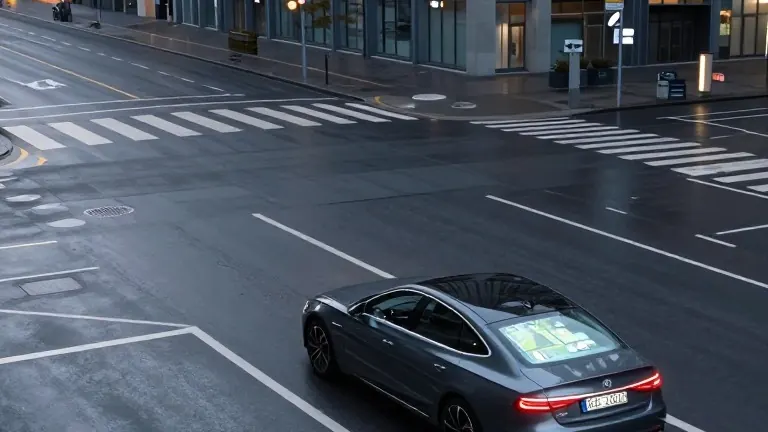
BMW announced on November 2 that it will begin offering navigation-guided driving assistance in urban areas starting in 2027. The rollout will start in Germany before expanding to other global markets. The company aims to challenge Tesla’s Full Self-Driving system by bringing automated capabilities to complex city environments.
The new feature allows the vehicle to steer, accelerate, and decelerate on both highways and local roads. In city traffic, the system assists with lane changes, turns, yielding to other vehicles, and navigating roundabouts. It relies on the car’s built-in GPS navigation to guide these maneuvers. This expansion marks a move beyond highway-only automation for the brand.
Drivers must maintain active supervision because the technology operates as a Level 2 system. Users must keep their eyes on the road and remain ready to take control at any moment. On local roads, drivers are required to keep their hands on the steering wheel. On highways, BMW will permit drivers to remove their hands from the wheel, a feature already common in many mass-market vehicles.
BMW states that the system works cooperatively with the driver rather than overriding human input. Drivers can steer, brake, or accelerate at any time to adjust the vehicle’s behavior without disabling the assistance. The car communicates its status through a heads-up display and a 3D map on the main dashboard screen. These visual aids show what the system sees and what actions it is taking.
The required cameras and sensors are already installed in several current models. These include the 3 Series, 7 Series, X5, iX3, and iX4. BMW will activate the urban driving feature through an over-the-air software update. The system aligns with new European safety regulations that allow cars to suggest and execute automated driving moves on city streets for the first time.
External experts have completed road tests of the setup. They confirmed that the system meets necessary technical standards. Final official government approval is expected in early 2027. This regulatory step is a prerequisite for the system’s launch in the German market.
Safety researchers have expressed growing concern about driver attention in vehicles with partial automation. Evidence suggests that most driver-assist systems are less safe than normal human driving. Drivers often develop an overreliance on the technology to operate the car. This reliance can lead to slower reaction times when drivers need to take back control after a short period of use.
BMW joins a growing number of automakers releasing partially autonomous city driving features. The company recently introduced its next-generation Neue Klasse platform, which incorporates driver assist technology from Qualcomm. The industry is racing to develop safe and capable city driving features that rival Tesla’s FSD. BMW emphasizes that drivers remain responsible for the vehicle even while using the system in urban environments. Tesla follows a similar model for its FSD feature, although some customers have successfully argued in court that the company shares responsibility for crashes.
More Business · Consumer Watch · Report a business · Got a Story?