Bison population recovers to nearly 500,000
Conservation efforts by ranchers, Indigenous groups, and others brought the national mammal back from a low of under 1,000 animals.
By Nathan Cooper ·
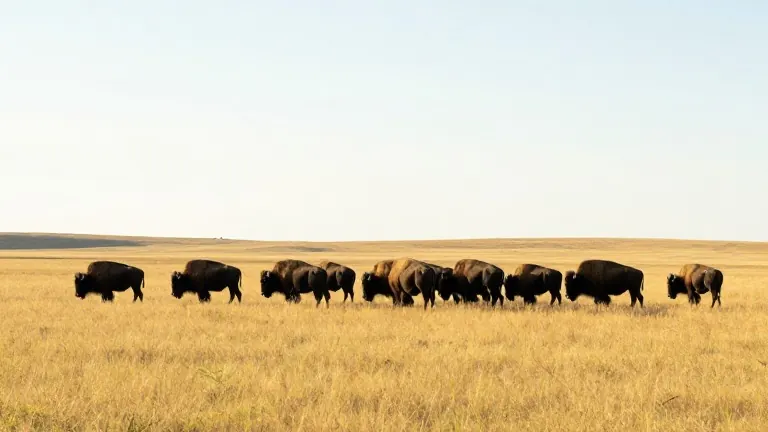
Bison are back. After falling to fewer than 1,000 animals, the population has grown to nearly 500,000, according to Ilana Xinos, executive director of the North American Bison Discovery Center in Jamestown, North Dakota.
The recovery took more than 100 years. In the 1800s, European settlers moved west, bringing railways, rifles, and a global market for hides. Those factors, combined with the loss of grazing land, caused the rapid decline of a herd that once numbered in the tens of millions.
Xinos described the effort to save the animal as the greatest success story in American conservation. She noted that when the population bottomed out before the 20th century, ranchers, Indigenous people, and even a taxidermist worked to gather the remaining bison. The taxidermist initially planned to collect specimens so people would know what the animal looked like, but he changed his mind and focused on keeping them alive.
The bison is currently classified as near threatened. Despite this status, the animals are common enough to appear on dinner plates across the country. Xinos said she often hears people worry that eating bison steak helps the animal disappear. She countered that people who ranch bison love them and work to keep them healthy.
The animal holds deep cultural and economic importance. It was central to Native American life, providing food, shelter, tools, clothing, and jewelry. That legacy, along with its role as a national symbol, led to the passage of the National Bison Legacy Act in 2016, which designated the bison as the national mammal.
Yellowstone National Park is the only place where bison have lived continuously since prehistoric times, according to the National Park Service. The agency reports that bison weigh more than 1,000 pounds and can reach speeds of up to 35 mph. Rangers advise visitors to stay at least 25 yards away, a distance equivalent to two standard school bus lengths.
Xinos said the bison is meant to be wild, but human development makes that difficult in many areas. She emphasized that conservation takes different forms and that there is no single right way to protect the species. The animal, she said, represents the nation’s resilience, having survived near extinction and continued to grow.
More News · Bradenton news · Report a business · Got a Story?