Army Sets Nov. 24 Deadline for Lead Azide Detonation in Iowa
Military officials cite rising crystallization risks and temporary bunker doors as they move to bypass a stalled federal permit.
By Nathan Cooper ·
The U.S. Army plans to detonate nearly five tons of lead azide at the Iowa Army Ammunition Plant by Nov. 24.
The military submitted a federal court filing on Nov. 21 to invoke an emergency exemption under hazardous waste regulations. This move allows the Army to proceed without the U.S. Environmental Protection Agency's emergency permit, which a federal appeals court has temporarily stayed. The detonation was originally scheduled for Nov. 20 but was delayed due to legal challenges concerning environmental and public health risks.
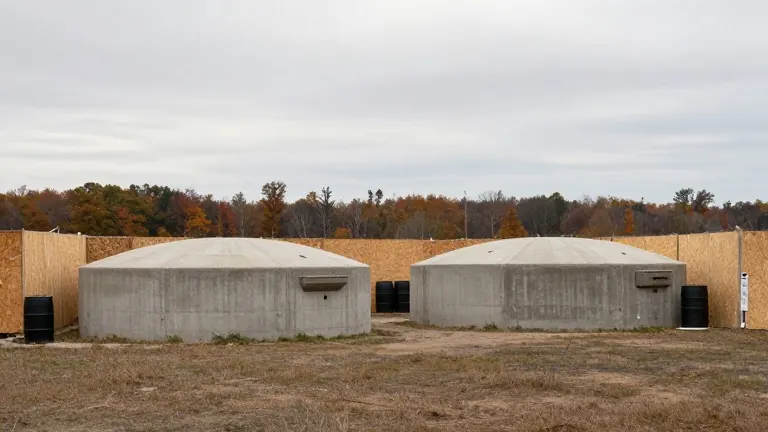
Army Col. Aaron Teller, commander of the 71st Ordinance Group, stated that recent temperature swings have increased the likelihood of a spontaneous explosion. Forecasts for temperatures below 30 degrees have exacerbated the instability of the deteriorating material. The lead azide is stored in 68 plastic drums inside two earth-covered bunkers in Des Moines County. An April inspection found crystallization in 58 of these barrels, forming needle-shaped crystals that are sensitive to friction and temperature changes.
Workers have been unable to replenish the water and ethanol mixture used to stabilize the explosives since Sept. 2025 because the barrels are too dangerous to open. Teller noted that temperatures in Middletown fluctuated between 24 and 70 degrees over the past week. Additionally, the heavy metal blast doors protecting the bunkers were removed for the planned detonation and replaced with temporary insulated plywood doors. The original doors cannot be reinstalled, leaving the explosives more exposed to outside weather conditions.
The Army argues that a controlled explosion is safer than an uncontrolled one because it allows for specific precautions. These measures include constructing protective barriers, using water to limit the spread of lead particles, and monitoring environmental impacts. The filing states that an uncontrolled explosion could scatter partially detonated material, creating conditions for additional blasts. It also notes that without public notice, a spontaneous explosion might cause panic among surrounding residents.
Environmental groups have challenged the detonation over the potential release of lead into the community. The U.S. Court of Appeals for the Eighth Circuit issued an administrative stay of the EPA's emergency permit on Nov. 21. Federal attorneys contend that the stay applies only to the EPA permit and does not block the Army's separate authority to respond to an imminent explosives threat under the Resource Conservation and Recovery Act. The Army says it will follow the safety and mitigation measures outlined in the original permit even while that permit remains suspended.
The filing serves as a notice of the Army's intended action rather than a new court ruling authorizing the detonation. The Army stated that the choice is between a planned, mitigated detonation and an unplanned, unmitigated explosion. The military aims to protect its personnel and surrounding communities by acting swiftly. The specific day for the detonation was not specified in the filing, only the deadline of Nov. 24.
More News · Bradenton news · Report a business · Got a Story?